6 Interior Design Details That Create a Luxurious Look
Publié le 16 octobre 2026
Luxury in interior design is not simply about the price of a sofa or the presence of high-end furniture. A space can be relatively simple and still convey a remarkable sense of elegance. What makes the difference? Lighting, colors, proportions, materials, and those thoughtful details that give a space its character. The good news is that you don’t have to change everything to transform the atmosphere of a room. Sometimes, a few well-considered choices are all it takes.
Discover six principles that can give your home a more refined look, along with a few pieces that might inspire you to recreate this atmosphere in your own space.
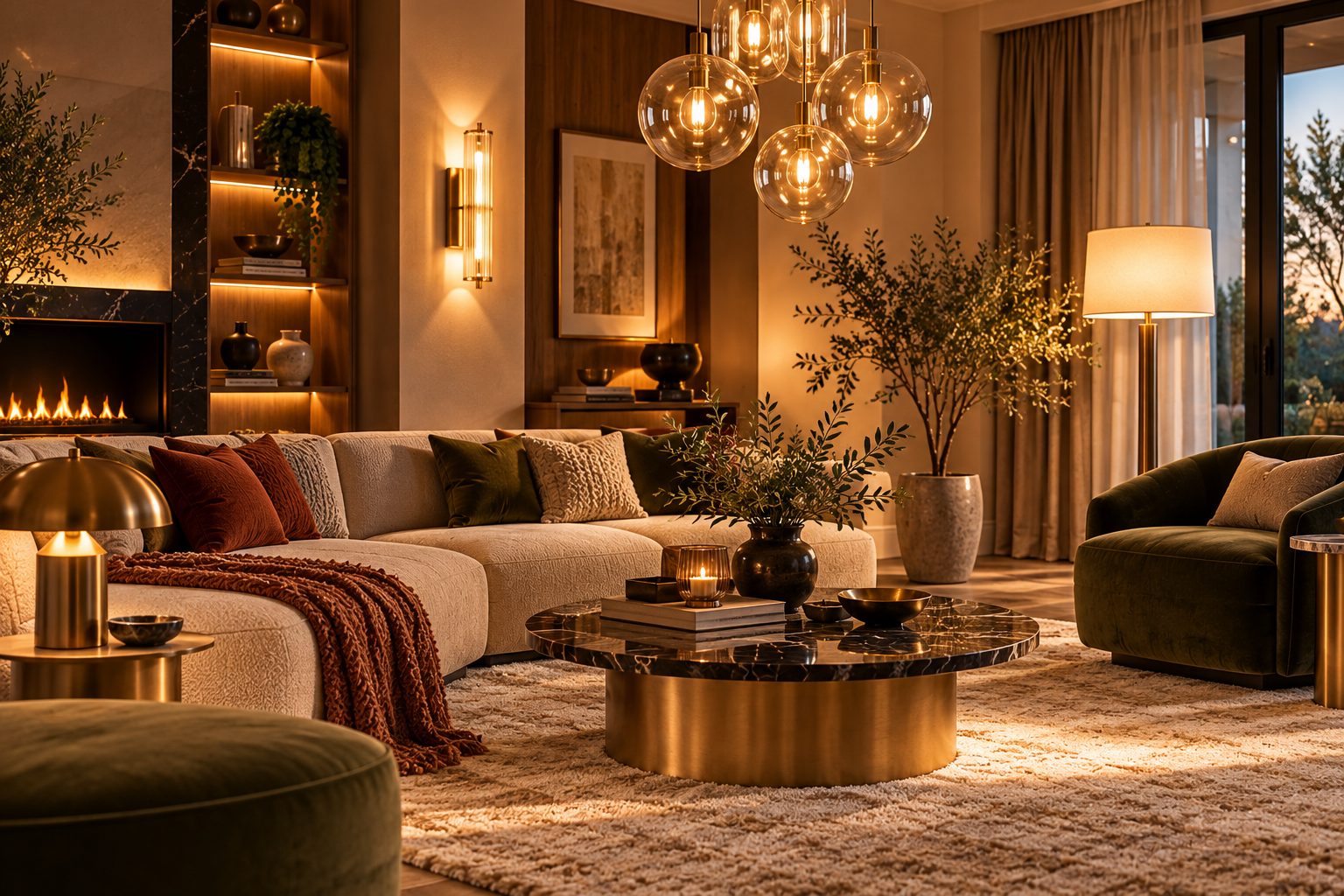
A ceiling light can illuminate a room effectively, but it isn’t always enough to create a warm, sophisticated atmosphere. In a thoughtfully designed interior, lighting comes from several sources: ambient lighting, table lamps, wall sconces, and decorative light fixtures.
Each serves a different purpose. A lamp beside the sofa creates a cozy reading nook. A wall sconce highlights a wall. Indirect lighting softens the overall atmosphere and prevents the room from feeling too uniform.
The goal isn’t to accumulate light fixtures, but to create an atmosphere that can adapt to different moments of the day.
The Detail That Makes All the Difference
If your living room feels cold despite having beautiful furniture, start by looking at the lighting. An additional light source, placed in the right spot, can sometimes transform a room more effectively than a new decorative object. Brass and glass wall sconces, for example, combine ambient lighting with an elegant decorative touch. My recommendation.
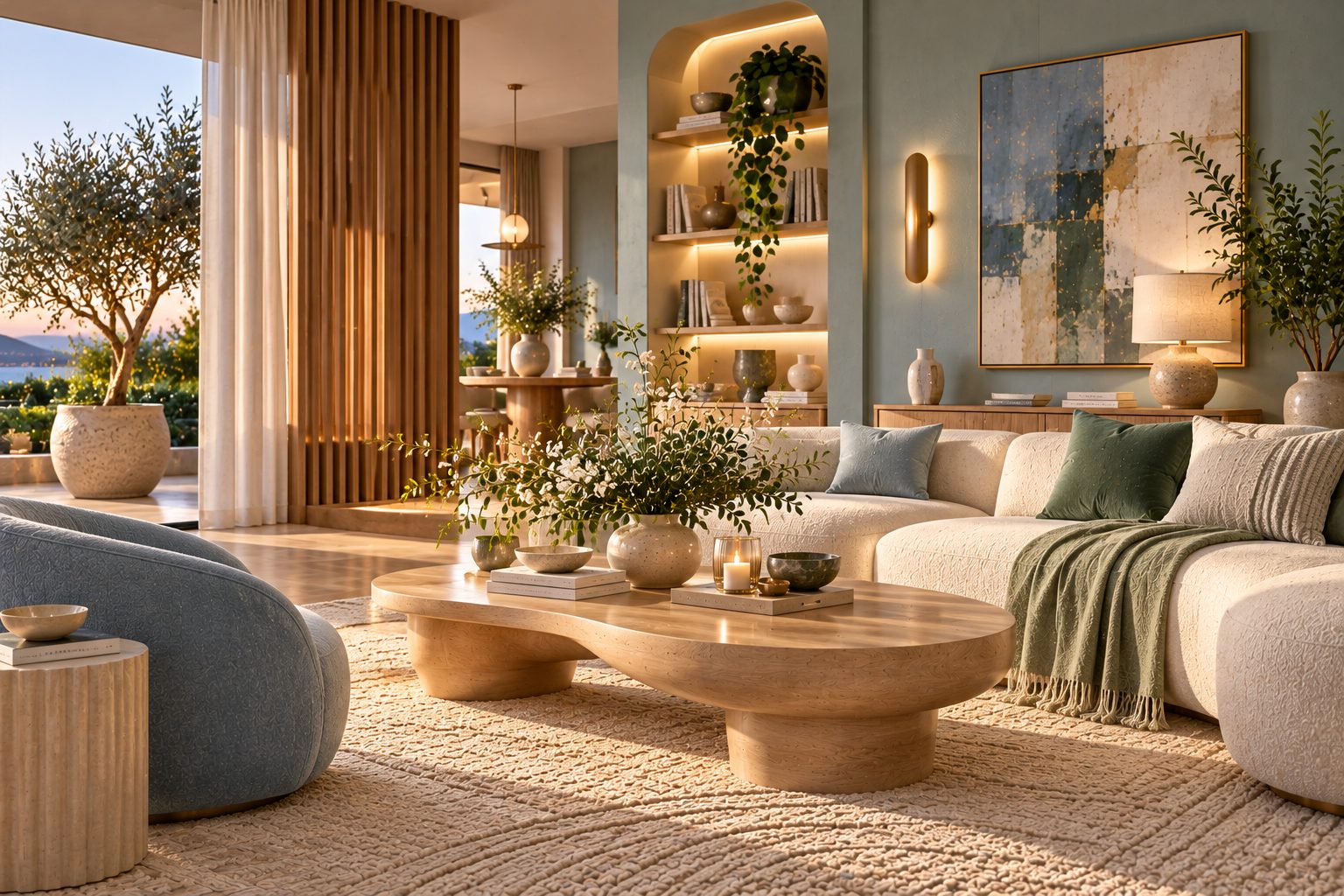
An elegant interior doesn’t need a wide variety of colors. What matters most is how those colors work together.
A palette of ivory, beige, warm wood, and brass can create a soft, timeless atmosphere. Shades of taupe, walnut, and deep green can bring more character to a different space.
The key is to choose a dominant color, pair it with a few complementary shades, and introduce an accent color when needed. This is one of the reasons a colorful accent chair can become a statement piece without throwing the entire room off balance.
How to Apply This in Your Home
If your living room is mostly made up of neutral tones, consider introducing a bolder color through an accent chair, cushions, or a decorative accessory.
Olive green, for example, pairs particularly well with cream tones, warm wood, and certain gold finishes.
The idea isn’t to add color everywhere, but to choose a shade that gives your room the personality it may be missing.
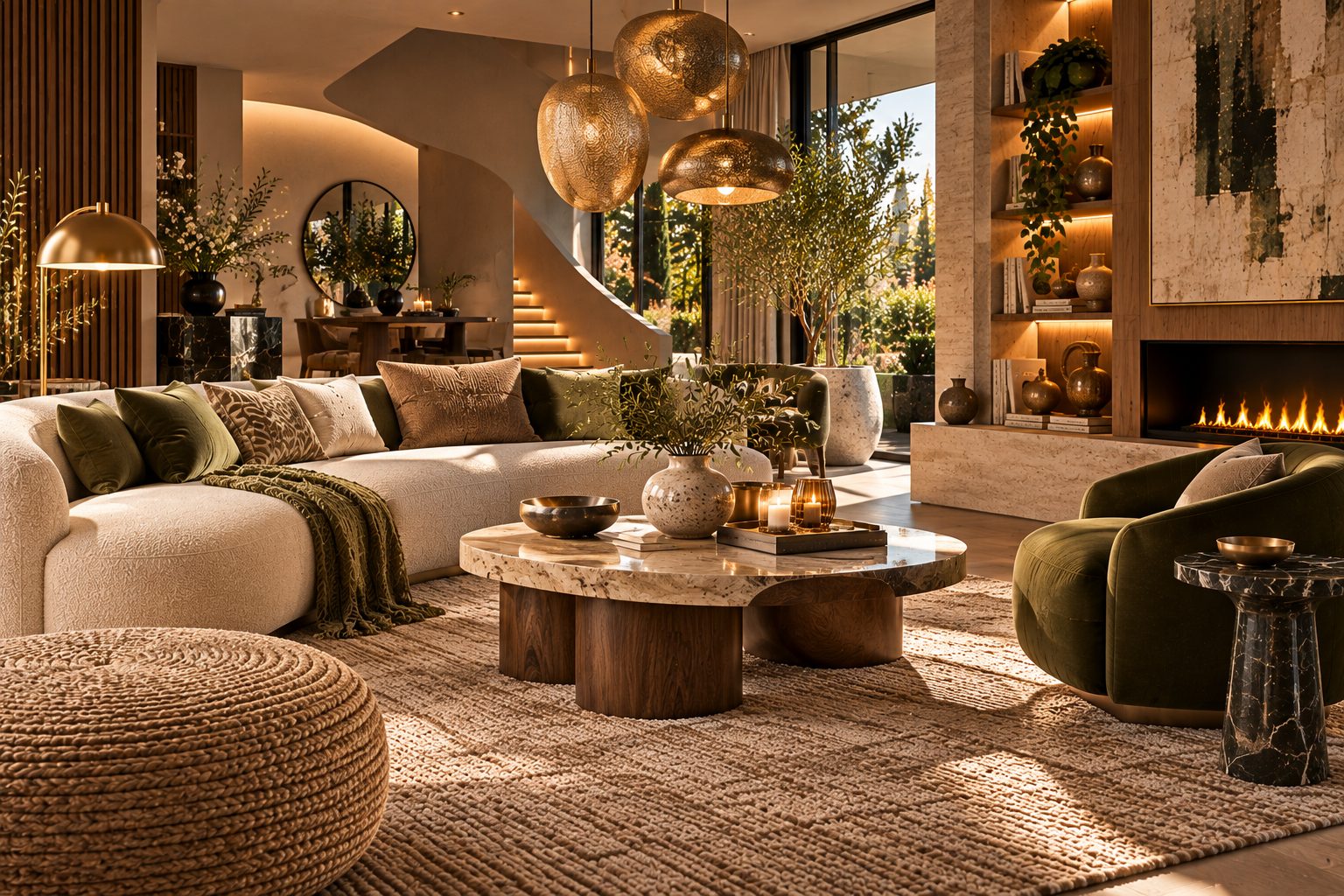
Even beautiful furniture can lose its impact when its proportions don’t suit the room. A coffee table that is too small in front of a large sofa, a rug that looks lost beneath the seating, or oversized armchairs can disrupt the overall balance.
By contrast, furniture that fits the space creates a sense of harmony and makes the room more comfortable to live in.
When arranging a harmonious living room, consider the size of the sofa, the dimensions of the coffee table, the area covered by the rug, and the pathways between furniture pieces. Every element should have its place without preventing the others from standing out.
A Useful Questions to Ask Before Buying
Does your coffee table look too small next to your sofa? Does your seating area feel unbalanced?
My recommendationA table with more suitable proportions can help bring the entire arrangement together. Glass and metal designs can also be a good choice when you want to introduce a decorative surface without making the room feel visually heavy. The goal isn’t to choose the largest piece of furniture, but the one that works best with everything else.
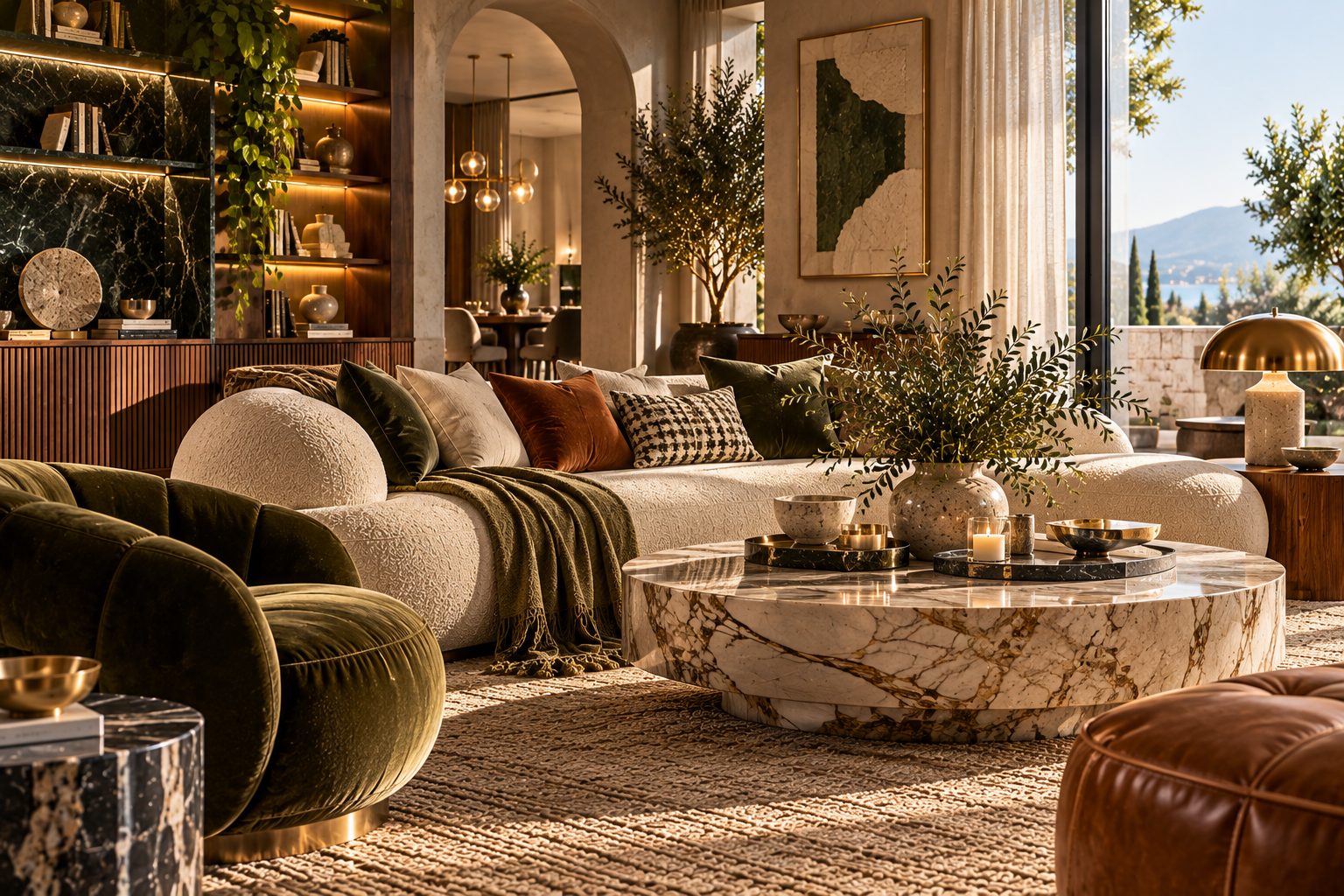
A room can use very few colors and still feel visually rich. Materials play an important role in creating that effect.
Imagine a fabric sofa, a soft rug, warm wood, and a coffee table combining glass and metal. Each material brings a different quality and adds depth to the overall design.
The contrast between a matte surface and a glossy finish, or between a soft textile and a mineral material, keeps a neutral palette from feeling monotonous.
The secret is to combine materials with intention rather than layering too many effects.
How to Create Contrast
My recommendationStart with the elements already present in your room. If most of your furniture is made of wood and fabric, a glass table or a metallic-finish accessory can introduce a new dimension. A side table with a marble top and a gold-finished frame, for example, can create an interesting contrast while remaining functional. One thoughtfully chosen piece may be enough to enrich the entire composition.
…